



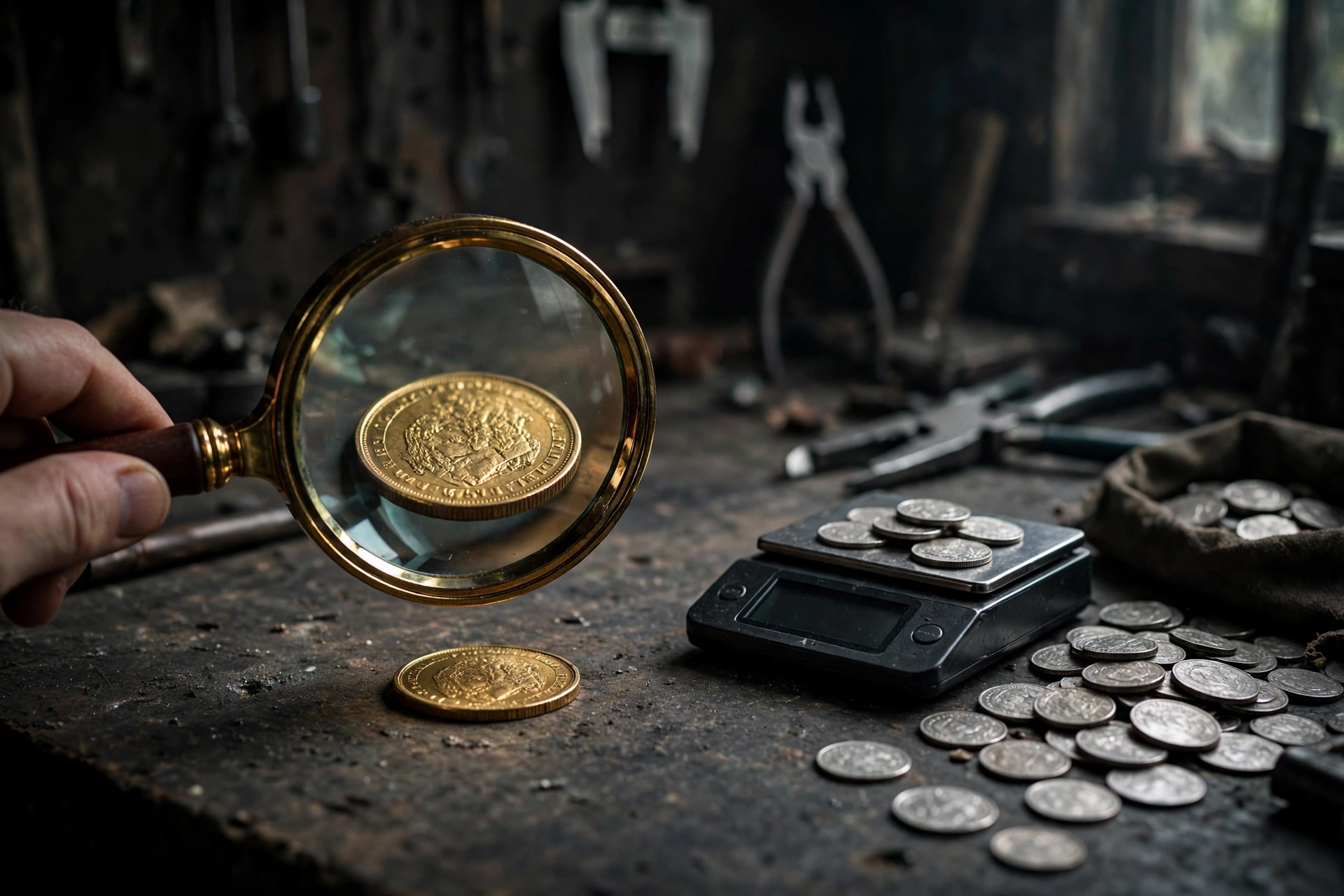
Counterfeit gold and silver are better than they used to be — and that’s exactly why you need to know how to spot them.
Modern fakes range from crude plated base metal to tungsten-filled bars that fool a casual inspection. The good news: almost every fake fails at least one simple test, and the combination of a few checks catches nearly all of them. You don’t need expensive equipment to protect yourself. You need to know which tests matter, which ones can mislead you, and when to stop testing at home and demand professional verification.
This guide walks through the checks in order — from the free ones you can do in seconds to the professional tests that settle the question for good — plus the red flags that should stop a purchase before it starts.
Table of Contents
- The Short Answer: How to Spot Fake Gold and Silver
- First Rule: Buy From Sellers You Can Verify
- The Free Checks: Look, Weigh, and Measure
- The Magnet Test — and Why It Isn’t Enough
- The Ping Test for Coins
- The Density Test: The Home Test Fakes Fear Most
- Acid and Scratch Tests: Effective but Destructive
- Professional Verification: Sigma, XRF, and Assay
- Red Flags That Should Stop a Purchase
- What to Do If You Already Bought a Fake
- Frequently Asked Questions
The Short Answer: How to Spot Fake Gold and Silver
Check the weight and dimensions against the mint’s official specifications, run a magnet test, listen to the ping on coins, and verify density with a water-displacement test — fakes almost always fail at least one of these. Buy only from established dealers, keep receipts and assay certificates, and for any high-value or doubtful piece, get a professional sigma or XRF test before you pay. No single home test is conclusive on its own; use at least two.
First Rule: Buy From Sellers You Can Verify
Before any test, the single most effective anti-counterfeit measure is where you buy. Established bullion dealers stake their business on authenticity — they test what they sell, they buy back what they’ve sold, and they have reputations to lose. A dealer with a storefront, a long track record, and a buyback program is a fundamentally different risk from an anonymous online seller or a stranger at a flea market.
That doesn’t mean private sellers are always selling fakes. Coin clubs, estate sales, and collector forums can be legitimate sources. But the burden of verification shifts entirely to you, and the price should reflect that risk. If a private seller can’t or won’t let you test the item before payment, walk away. No bargain is worth an unverifiable bar.
Keep every receipt, assay certificate, and original packaging. If you ever resell, those documents are part of what proves your metal is genuine — and their absence is part of why dealers discount undocumented metal. For more on the selling side, see our guide to how to sell gold and silver without getting lowballed.
The Free Checks: Look, Weigh, and Measure
Start with your eyes, a scale, and a ruler. These cost nothing and catch the majority of crude fakes.
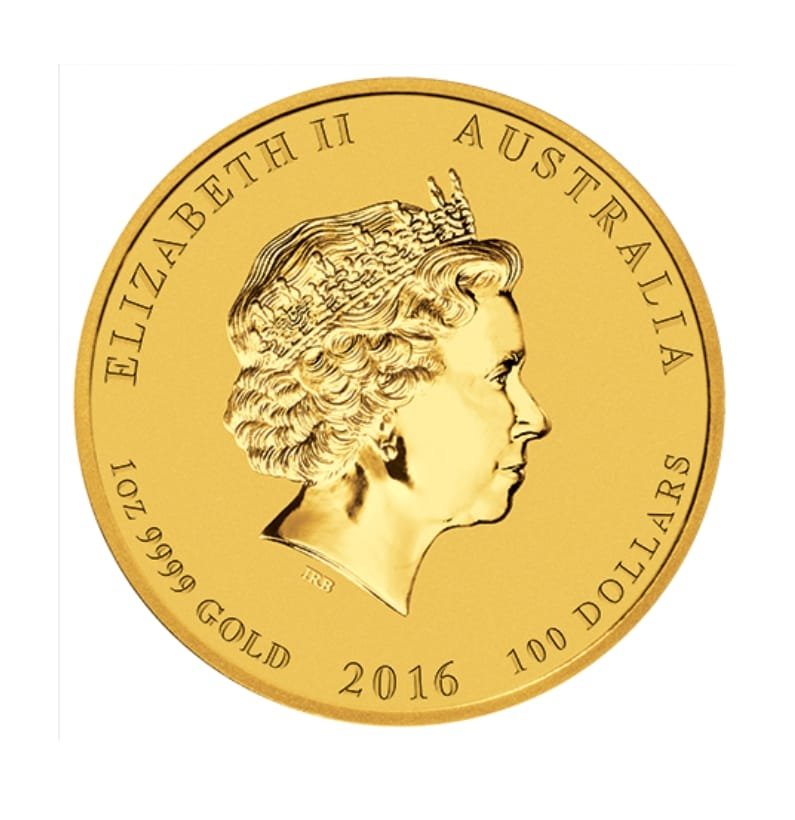
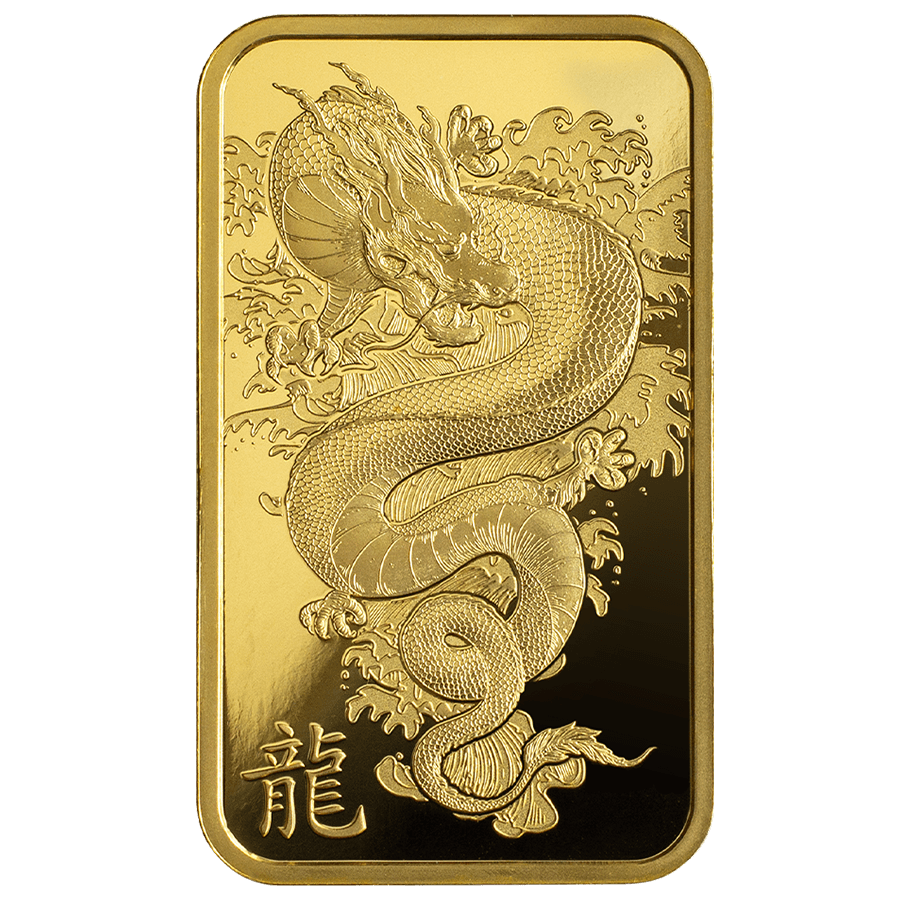
Visual inspection. Compare the piece against official images from the mint. Check the sharpness of the design — genuine struck coins and minted bars have crisp, consistent detail; fakes often show soft edges, blurry lettering, pitting, or uneven surfaces. Look at the reeded edge on coins: it should be uniform all the way around. Check the font and spacing of inscriptions against a known genuine example, and be suspicious of spelling errors or wrong dates. Seams are a giveaway — a visible seam around the edge usually means a cast copy, not a struck original.
Weight. Weigh the piece on a precise digital scale (accurate to at least 0.1 grams, ideally 0.01). Compare it to the mint’s official specification. A 1 oz gold coin should weigh 31.1 grams (or 33.93 grams for a 22-karat coin like the American Gold Eagle, which contains a full ounce of gold plus alloy). Any meaningful deviation from spec is a fail — genuine mints hold extremely tight tolerances, so a coin that’s noticeably light or heavy is either fake or damaged.
Dimensions. Measure diameter and thickness with calipers and compare to spec. This catches a whole class of fakes: a counterfeiter using a cheaper, less dense metal must make the piece larger to hit the right weight, and a counterfeiter using the right metal at the wrong purity must make it smaller. If the weight is right but the size is wrong — or vice versa — something is off.
Weight and dimensions together are powerful because they constrain each other. A fake can match one, but matching both requires matching the metal’s density — which is much harder to fake.
The Magnet Test — and Why It Isn’t Enough
Gold and silver are not magnetic. A strong neodymium magnet should not stick to a genuine gold or silver piece. If it does stick, the piece contains a magnetic metal like iron or nickel, and it’s fake. That’s a useful, instant rejection test.
But passing the magnet test proves very little. Many fake metals are also non-magnetic — including tungsten, the metal most commonly used in high-end gold fakes, and the copper and zinc alloys used in cheap silver copies. A magnet test that shows “not magnetic” tells you the piece isn’t iron. It does not tell you it’s gold or silver.
Use the magnet test as a first screen, never as a verdict. A piece that fails it is definitely fake. A piece that passes it still needs the other checks.
The Ping Test for Coins
Genuine gold and silver coins ring when struck — a clear, sustained tone that lasts a second or two. Base-metal copies tend to produce a dull thud. To test, balance the coin on a fingertip and tap it lightly with another coin or a pen, then listen.
This works because of how sound travels through dense, uniform metal. A genuine coin is a single, homogeneous piece of precious metal; a plated or filled fake has layers and voids that deaden the sound.
The ping test is genuinely useful for coins, but it has limits. It doesn’t work well for bars (their shape and mass change the sound), it requires practice to judge, and some sophisticated fakes can approximate the ring. There are also phone apps that analyze the ping frequency against known signatures for common coins — helpful as a supplement, not a replacement for physical checks. Use the ping test as one signal among several, never the only one.
The Density Test: The Home Test Fakes Fear Most
If you do one serious home test, make it this one. Density — mass divided by volume — is a fingerprint of the metal itself. Gold’s density is about 19.32 grams per cubic centimeter; silver’s is about 10.49. Almost no cheap substitute matches those numbers, and matching them requires using the real metal (or tungsten, in gold’s case — more on that below).
The water-displacement method is simple:
- Weigh the piece dry on a precise scale and record the weight in grams.
- Fill a graduated container with water, note the level, submerge the piece completely, and note the new level. The difference is the volume in milliliters (1 ml = 1 cm³).
- Divide weight by volume. If the result is close to 19.32 for gold or 10.49 for silver, the metal matches. If it’s far off, it isn’t that metal.
Practical notes: use distilled water at room temperature, make sure no air bubbles cling to the piece, and be careful with pieces that have cavities or are mounted in holders — those distort the volume measurement and can give false results. For coins, the test is straightforward. For sealed bars, you can’t submerge without breaking the seal, which is one reason to buy sealed bars only from dealers you trust.
The one famous exception: tungsten has nearly the same density as gold, which is why tungsten-filled gold bars are the hardest fakes to catch at home. A tungsten-core bar passes weight, dimensions, density, and magnet tests. Catching it requires a professional test — ultrasound, electrical conductivity (sigma) testing, or drilling — which is why high-value bars deserve professional verification before purchase.
Acid and Scratch Tests: Effective but Destructive
Acid test kits are cheap and widely sold. You scratch a tiny streak of the metal onto a test stone and apply acid: genuine gold resists acids that dissolve base metals, and different acid strengths correspond to different karat levels. Silver has its own test solution that produces a characteristic color reaction.
These tests work, but they have a real cost: they damage the piece. A scratch on a bullion coin or bar reduces its condition value, and on a proof or numismatic coin it can be far more costly than the test is worth. Acid tests also only test the surface — a thickly plated fake can pass a shallow scratch test while hiding base metal underneath.
Use acid tests only on items where surface damage doesn’t matter — scrap, damaged pieces, or metal you already suspect. For anything you’d want to resell in good condition, prefer non-destructive tests.
Professional Verification: Sigma, XRF, and Assay
When the stakes are high — a large bar, a big purchase, or any piece that failed or barely passed a home test — get professional verification. Reputable dealers will test a piece in front of you, often for free if you’re buying from them.
Sigma testing (electrical conductivity). A sigma verifier sends an electromagnetic signal through the metal and measures how it responds. Gold, silver, and their common substitutes each have distinct conductivity signatures, and the test penetrates below the surface — so it catches plated fakes and, in many cases, tungsten-filled bars. It’s fast, non-destructive, and the standard tool at serious dealers.
XRF analysis (X-ray fluorescence). An XRF gun identifies the elemental composition of the metal’s surface with high precision. It’s the most definitive non-destructive test available, but the equipment is expensive, so you’ll find it at dealers, refiners, and assay offices rather than at home.
Fire assay. The gold standard, literally: a sample is melted and chemically analyzed. It’s completely definitive — and completely destructive, since it consumes the sample. It’s used for large lots, refinery intake, and disputes, not for checking a single coin.
For most buyers, the practical rule is simple: if a dealer won’t sigma-test a high-value piece in front of you, buy it somewhere else.
Red Flags That Should Stop a Purchase
Tests matter, but so does judgment. Stop and walk away if you see any of these:
- A price far below market. There are no bargains in bullion. A seller offering gold or silver significantly under spot is selling fakes, stolen goods, or nothing at all.
- No testing allowed. A legitimate seller welcomes verification. Refusal to let you weigh, measure, or test is an admission.
- No receipt, no packaging, no provenance. Undocumented metal from an unknown source carries the highest fake risk.
- High-pressure tactics. “Buy now, someone else is coming for it” is a classic scam setup. Real dealers don’t rush you.
- Vague or inconsistent details. A seller who can’t name the mint, weight, or purity of what they’re selling doesn’t know their product — or doesn’t want you to.
- Unusual payment demands. Wire transfers to personal accounts, gift cards, crypto-only payments, and “friends and family” payment options all remove your recourse if the deal is fake.
What to Do If You Already Bought a Fake
If you discover a piece is counterfeit, act quickly. Contact the seller first — reputable dealers will make it right, and their reaction tells you a lot about whether the sale was a mistake or a scam. If the seller won’t help, report it: your local police for fraud, the marketplace or platform if it was an online sale, and your payment provider for a chargeback or dispute. Keep the piece, the packaging, and all communications — don’t destroy the evidence, and don’t try to resell it as genuine. Passing on a known fake is fraud, even if you were its victim first.
Frequently Asked Questions
Can a magnet test prove gold is real?
No. It can only prove a piece is fake — if a magnet sticks, the piece contains magnetic metal and isn’t gold or silver. Many fake metals are non-magnetic too, so passing the magnet test means almost nothing on its own.
Is the density test reliable for gold?
Yes, for most fakes — gold’s density of about 19.32 g/cm³ is very hard to imitate with cheap metals. The exception is tungsten, which has nearly identical density and requires professional conductivity or ultrasound testing to detect.
Do I need to test gold bought from a major dealer?
For standard bullion from an established dealer, the risk is low — but testing is still cheap insurance, especially for large bars. Many dealers will sigma-test your purchase in front of you at no charge.
What’s the best test for silver coins?
Weight and dimensions against mint spec, plus the ping test, catch most fake silver. Silver fakes are usually lighter or the wrong size because silver’s substitutes are less dense. For larger lots, a sigma test is definitive.
Are fake gold bars common?
Sophisticated fakes exist but are uncommon relative to the total market, and they concentrate in high-value bars sold through unverified channels. Buying sealed bars from major refiners through established dealers keeps your risk very low.
Next step: Before your next purchase, bookmark the official specifications for the coins or bars you buy — weight, diameter, thickness — and carry a small scale and a neodymium magnet. Two minutes of checking beats months of regret. And if you’re weighing bars against coins for your first purchase, see this week’s companion post on bars vs coins.