


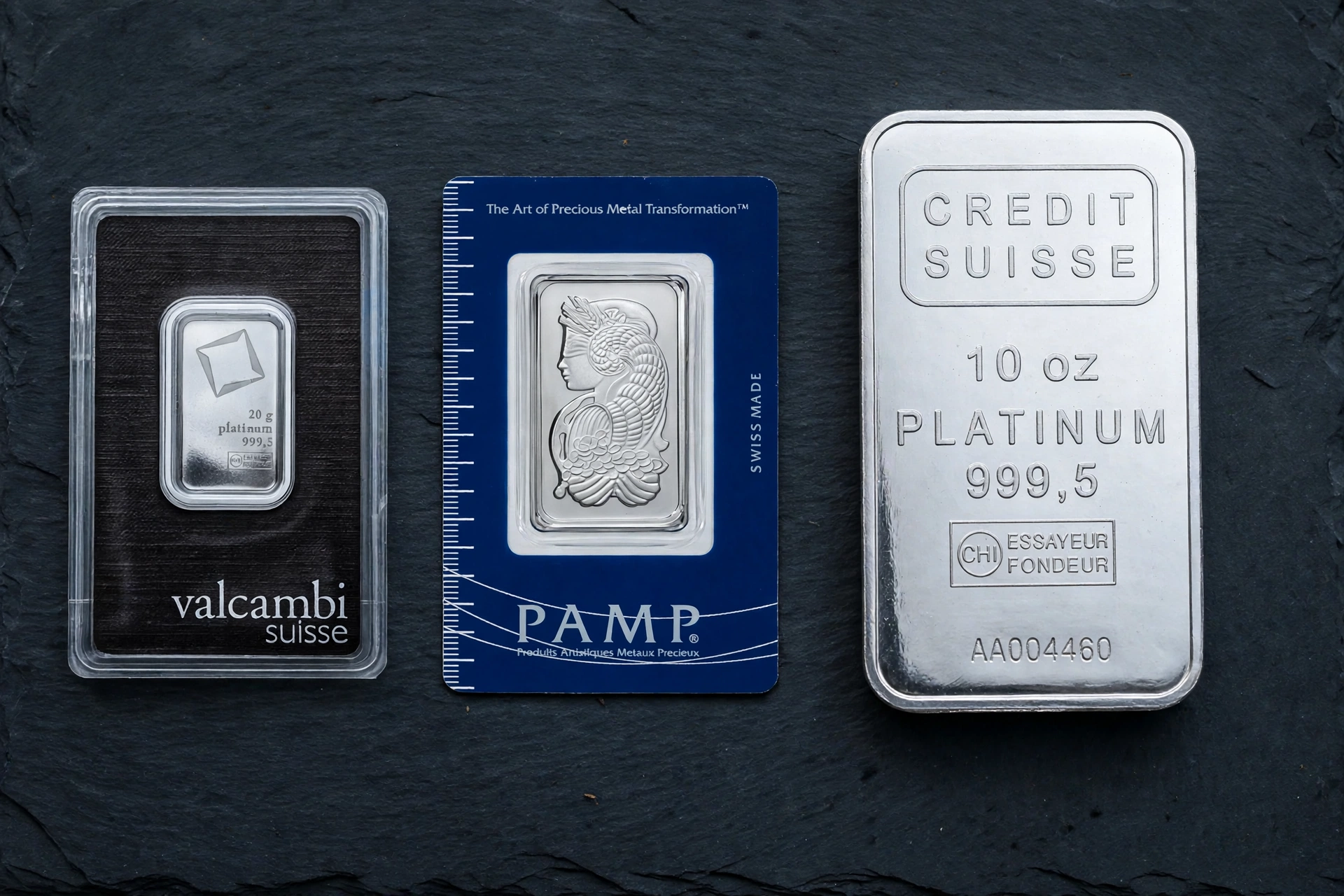
Most platinum buyers ask the wrong first question. They ask “is platinum a good buy?” when the question that decides what they actually pay is simpler: what size bar should I buy? A 20 g bar and a 10 oz bar are the same metal — but the smaller one costs roughly a third more per ounce, and the larger one is far harder to sell in a hurry.
Our search data says buyers are already thinking this way: the queries bringing people to Bullion Bridge include “platinum bullion bars” and “platinum bars under £20000” — people shopping by size and by budget. This guide answers them: every standard size, what each costs today, minted versus cast, and which size fits which buyer. For the general case for platinum, read our guide to buying platinum first.
The Short Answer: Which Platinum Bar Size Should You Buy?
For most buyers, a 1 oz platinum bar is the right first purchase — big enough that the premium stays reasonable, small enough to sell easily. Under $1,200, buy the 20 g Valcambi bar. Buying several ounces at once and holding long-term, the 10 oz bar is cheapest per ounce. Avoid 1 g and 5 g bars: premiums run 18–39% over spot. Platinum spot is about $1,300 an ounce (November 24, 2026) — but read the price table below first. Shelf prices have not caught up with a sharp fall in spot, so premiums on our own shop are running near 33–35% today, far above the 5–9% the cheapest dealers charge.
Platinum Bar Sizes at a Glance
Platinum bars are sold in grams and in troy ounces. One troy ounce is 31.1035 grams — use troy ounces, not regular ounces, for every calculation.
| Bar size | Weight | Troy ounces | Best for |
|---|---|---|---|
| 1 g bar | 1 gram | 0.032 oz | Gifts, not investment |
| 5 g bar | 5 grams | 0.161 oz | Small gifts, first taste |
| 10 g bar | 10 grams | 0.322 oz | Small budgets |
| 20 g bar | 20 grams | 0.643 oz | Entry-level investment |
| 50 g bar | 50 grams | 1.608 oz | Mid-size holding |
| 100 g bar | 100 grams | 3.215 oz | Serious stacking |
| 1 oz bar | 31.1035 g | 1.000 oz | The standard first buy |
| 5 oz bar | 155.5 g | 5.000 oz | Bulk buying |
| 10 oz bar | 311.0 g | 10.000 oz | Lowest premium per ounce |
| 1 kg bar | 1,000 g | 32.151 oz | Large holdings, vault storage |
What we stock: the 20 g Valcambi bar, two 1 oz bars (PAMP Lady Fortuna and Engelhard), and a 10 oz secondary-market bar. We do not stock the other sizes — their prices below are the cheapest dealer prices across the market, shown for fair comparison.
Two patterns hold everywhere. First, the premium per ounce falls as the bar gets bigger: fabrication, assay, packaging, shipping, and insurance cost roughly the same per piece whatever the size. Second, liquidity runs the other way: a 1 oz bar has thousands of buyers; a 1 kg bar has far fewer.
What Platinum Bullion Bars Cost Right Now
Premiums are measured against the platinum spot price — the LBMA Platinum Price, fixed twice daily in London. Here is what our shop charged on November 24, 2026, against spot of about $1,300.00 an ounce (Kitco, 7:06 AM ET, $1,294; other feeds that morning ranged $1,298–$1,306):
| Product | LIVE PRICE (NOV 24, 2026) | Metal value | Premium over spot |
|---|---|---|---|
| 20 g Valcambi Platinum Bar | $1,120.00 | $835.90 | $284.10 → 34.0% |
| 1 oz Lady Fortuna Platinum Bar (PAMP Suisse) | $1,742.00 | $1,300.00 | $442.00 → 34.0% |
| 1 oz Engelhard Platinum Bar | $1,745.00 | $1,300.00 | $445.00 → 34.2% |
| 2021 1 oz American Platinum Eagle BU | $1,750.00 | $1,300.00 | $450.00 → 34.6% |
| 10 oz Platinum Bar, .999+ fine (secondary market) | $17,300.00 ($1,730/oz) | $13,000.00 | $430.00/oz → 33.1% |
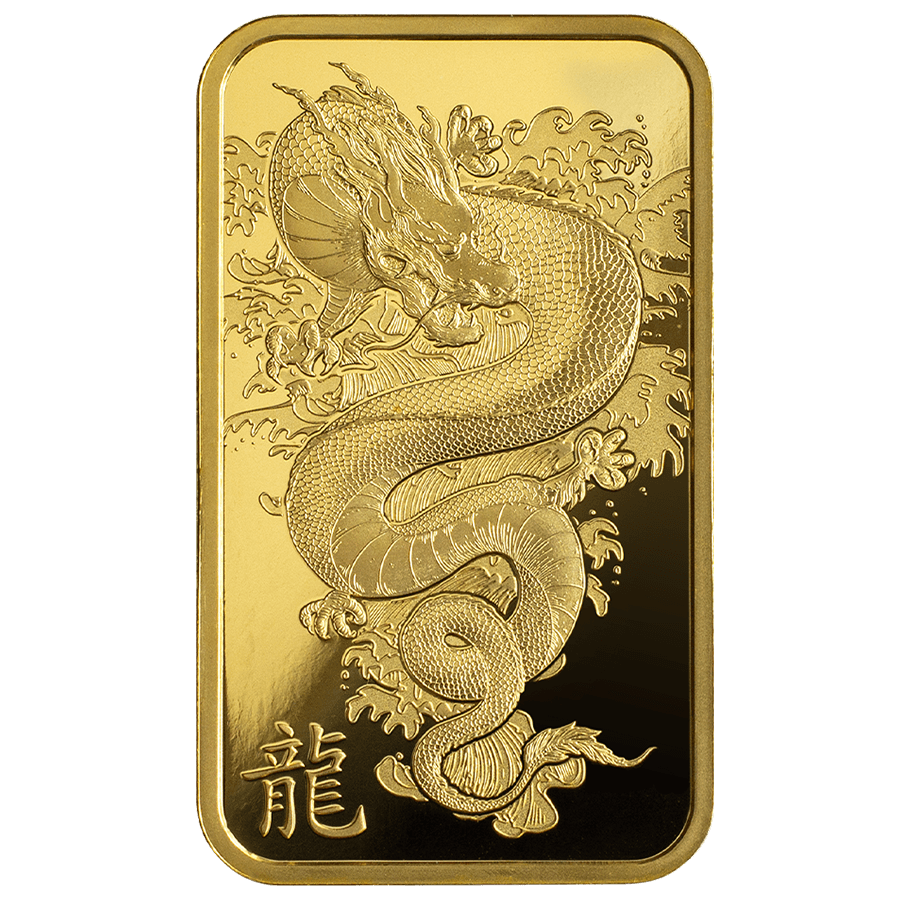
| 2024 China Dragon 15 g Platinum Proof Coin, colorized | $822.00 (15 g = 0.482 oz) | $626.60 | $195.40 → 31.2% (collector premium) |
That table contains a warning. Nine days ago spot was $1,488.80 and these shelf prices carried 16–18% premiums. Since then spot has fallen about 13% to roughly $1,300 — gold fell too, from $3,883.45 to about $3,550 on November 20, then bounced back to roughly $3,630, while platinum kept falling — and our shelf prices have not moved.
Compare before you buy. The cheapest dealer prices for the same sizes on November 20 (FindBullionPrices, spot $1,312.39):
| Bar size | Cheapest dealer price | Premium over spot |
|---|---|---|
| 1 g platinum bar | $58.45 | 38.5% |
| 5 g platinum bar | $248.27 | 17.7% |
| 10 g platinum bar | $476.52 | 12.9% |
| 20 g platinum bar | $916.39 | 8.6% |
| 50 g platinum bar | $2,286.18 | 8.4% |
| 1 oz platinum bar | $1,382.70 | 5.4% |
| 1 oz PAMP Fortuna bar | $1,418.06 | 8.1% |
| 1 oz Engelhard bar | $1,427.03 | 8.7% |
| 10 oz platinum bar | $13,795.90 | 5.1% |
On November 20, a 1 oz PAMP Fortuna cost $1,742 on our shelf and $1,418 at the cheapest dealer — $324 more for the same bar. Our November 16 guide said a 30% premium is a reason to shop elsewhere; by that standard, today is a day to shop around or wait. Check the live price before you order, and compare two other dealers if the premium is still above 25%. The market table also proves the size rule: the cheapest 1 g bar carries 38.5%; the cheapest 10 oz bar 5.1%.
Minted vs Cast Platinum Bars
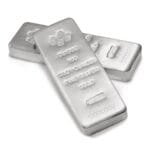
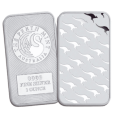
Every platinum bar is made one of two ways. Minted bars are struck from rolled sheets, like coins — sharp designs, precise dimensions, almost always sealed in a tamper-evident assay card stating weight, purity, refiner, and serial number. PAMP’s Lady Fortuna and Valcambi’s bars are minted. You pay more for the striking, design, and packaging — and you get recognition back: any dealer worldwide will buy a sealed PAMP or Valcambi bar without testing it.
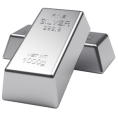
Cast bars are poured molten into a mold. Rougher finish, usually no assay packaging, cheaper to produce, most common in larger sizes (10 oz, 1 kg). The trade-off is verification: a dealer buying a cast bar, or any bar outside its sealed card, has to test it first — costing you time and sometimes money.
Engelhard bars are a third category: secondary market. Engelhard stopped refining decades ago, so every Engelhard bar today is a resale — prized for the name, recognized worldwide, but sold as-is without new assay packaging. Our 1 oz Engelhard and 10 oz bars are in this category: real .999+ fine platinum, tested and verified, without sealed-card convenience.
For a first purchase, buy a sealed minted bar from PAMP or Valcambi. For bulk at the lowest cost per ounce, a cast or secondary-market 10 oz bar. Never buy an unbranded bar with no assay certificate and no serial number.
How to Choose the Right Size for Your Budget
Work backwards from two numbers: how much you can spend, and how soon you might need to sell.
Under $1,000. A 10 g or 20 g bar. The 20 g Valcambi at $1,120 is just above this band — the smallest bar we stock that makes sense as an investment rather than a gift. A 1 g or 5 g bar fits any budget, but at 18–39% premiums you pay mostly for fabrication, not metal. If $1,000 is your ceiling, wait and save.
$1,000–$2,000. One 1 oz bar — the sweet spot: efficient premium, easy resale, the most recognized platinum format in the world. The Lady Fortuna at $1,742 and the Engelhard at $1,745 are the two we stock here. The Fortuna’s sealed assay card makes it the easier resale; the Engelhard’s name makes it the more interesting hold.
$2,000–$10,000. Several 1 oz bars, not one large bar. You can sell one at a time — flexibility worth more than the small premium saving. Our gold bars vs gold coins guide makes the same point for gold.
$10,000 and up. The 10 oz bar earns its place. At $17,300 it is our cheapest platinum per ounce — roughly $12 an ounce less than our 1 oz bars today. But do not put your whole position in one bar: keep a few 1 oz bars alongside it so you can sell in pieces. And store it properly — a 10 oz bar belongs in a bank safe deposit box or a private vault (see our storage guide).
One more signal from our search data: “platinum bars under £20000” tells us buyers shop with a ceiling in mind. Our largest bar, the 10 oz at $17,300, sits comfortably under that line. If you are still deciding between platinum and palladium, our platinum vs palladium comparison on Bullion Estate weighs the two head to head.
What to Check Before You Buy Any Platinum Bar
- Fineness .9995. Investment-grade platinum bars are stamped .9995 fine — the industry standard and the IRS minimum for IRA eligibility under IRC §408(m). Our 10 oz bar is stamped .999+ fine, which also clears it. Anything below .9995 is not investment-grade platinum.
- Sealed assay card, or a reason it is missing. A new minted bar should arrive sealed, with weight, purity, refiner, and serial number on the card. If the seal is broken, ask why — and expect a lower price.
- A refiner you recognize. PAMP Suisse, Valcambi, Engelhard, Johnson Matthey, Credit Suisse, Argor-Heraeus. These names are accepted by dealers worldwide.
- The premium, computed from today’s spot. Retail price minus metal value (spot × troy ounces), divided by metal value. Over 25% on a 1 oz bar in a calm market — compare two other dealers first. At or below spot, walk away: nobody sells real platinum below its metal value.
- The buyback. Ask what the dealer will pay to buy the bar back, before you buy it. Spreads vary sharply by brand: one dealer’s live buyback board on November 20 paid $1,273.50 for a 1 oz Engelhard bar — about 3% under spot — and $1,537.80 for a 1 oz PAMP Fortuna bar.
Which Sizes Are Easiest to Sell Later
1 oz bars are the most liquid platinum there is. Every major dealer buys them, in any quantity, with the tightest buyback spread in platinum. If you might need the money within a year or two, hold your platinum in 1 oz bars.
20 g bars sell well but to a smaller pool. The premium you paid going in — about 34% today — is money you will not recover on the way out.
10 oz bars sell slowly. Few dealers want to lay out $17,300 for a single secondary-market bar with no original assay packaging. Expect a wider spread and a longer wait — the 10 oz bar is a hold-to-maturity product.
Proof and collector pieces are the slowest of all. The 2024 China Dragon 15 g proof coin is a legitimate collectible, but its buyer is a collector, not a dealer — do not buy one expecting to flip it.
The rule: match the size to your time horizon. Money you might need soon belongs in 1 oz bars. Money you can forget about for five years can go into a 10 oz bar. Keep the assay card sealed and the receipt — both are worth money when you sell.
Frequently Asked Questions
What is the best size platinum bar to buy?
For most buyers, 1 oz — the best balance of reasonable premium, easy resale, and recognizable format. On a smaller budget, start with a 20 g bar; spending $10,000 or more, add a 10 oz bar while keeping some 1 oz bars for flexibility.
How much does a 1 oz platinum bar cost?
As of November 24, 2026, platinum spot is about $1,300 an ounce. Our 1 oz bars cost $1,742 (PAMP Lady Fortuna) and $1,745 (Engelhard) — about 34% over spot, unusually wide because spot fell about 13% in nine days and shelf prices have not adjusted. On November 20 the cheapest dealer price was $1,382.70, a 5.4% premium.
Minted vs cast platinum bars — which is better?
Minted bars (PAMP, Valcambi) cost more but arrive sealed in an assay card, which makes them easier to sell. Cast bars cost less per ounce but usually lack assay packaging, so the dealer has to test them at resale. For a first purchase, buy minted. For bulk at the lowest cost per ounce, cast or secondary-market 10 oz bars make sense.
Are platinum bars IRA-eligible?
Yes, at .9995 fineness or higher, under IRC §408(m). The PAMP Lady Fortuna, Valcambi, and Engelhard bars we stock all qualify, as does our 10 oz secondary-market bar at .999+ fine. The metal must be held at an approved depository, never at home. Confirm the exact product with your custodian before buying.
Next step: Start with the size that fits your budget — a 20 g Valcambi Platinum Bar under $1,200, a 1 oz Lady Fortuna Platinum Bar for most buyers, or the 10 oz Platinum Bar for bulk buying. Before you order, check the live price on the product page and compute the premium from today’s spot — if it is still above 25%, compare two other dealers first. And if you have not read it yet, our guide to buying platinum covers the metal itself: why buy it, IRA rules, and the honest truth about selling it.
This article is for education only and is not financial or tax advice. Platinum prices are volatile and the market is thinner than gold or silver — confirm the live spot price and the dealer’s buyback policy before you buy.